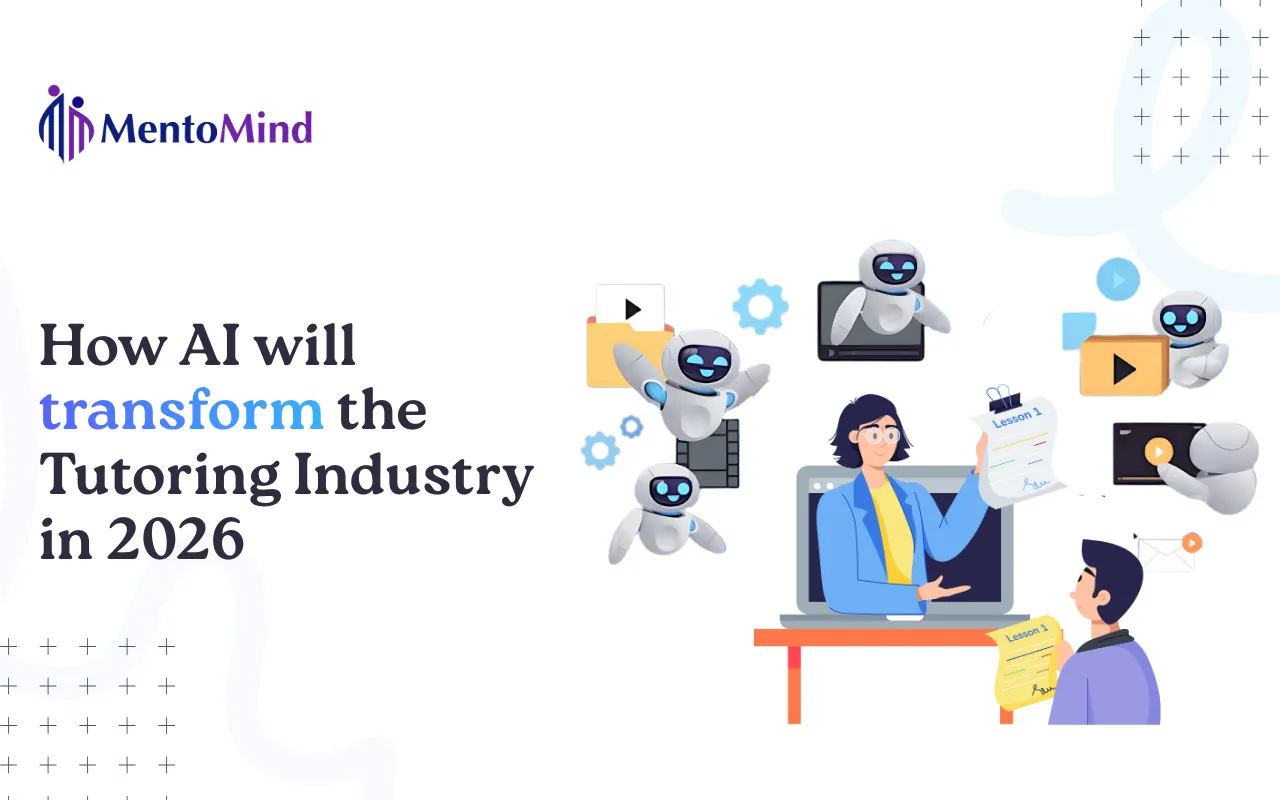
AI will transform the tutoring industry in 2026 by automating administrative tasks, enabling personalized learning at scale, and providing instant feedback to students. Research from McKinsey shows teachers can redirect 20-40% of their time from routine tasks to direct student engagement. Benjamin Bloom’s landmark 1984 research demonstrated that one-on-one tutoring with mastery learning techniques allows students to perform two standard deviations above classroom peers—meaning the average tutored student outperforms 98% of traditionally taught students. Modern AI tutoring systems aim to replicate these benefits at scale, although human tutors remain essential for motivation, strategy, and emotional support.
Key Research-Backed Takeaways
- 20-40% of teacher time is spent on tasks that could be automated using existing technology (McKinsey, 2020)
- Two standard deviations improvement in student achievement through one-on-one tutoring with mastery learning (Bloom, 1984)
- 98% of classroom peers outperformed by the average tutored student in Bloom’s research
- AI enables new forms of adaptivity responding to student learning processes step-by-step, not just right/wrong answers (U.S. Dept. of Education, 2023)
- Human tutors remain irreplaceable for motivation, emotional support, and higher-order reasoning
What AI Can Now Do for Tutors (That Used to Take Hours)
This section covers the practical capabilities that reduce time spent on routine tasks—freeing tutors to focus on direct instruction and student relationships.
Administrative Automation
- Turn PDF worksheets into auto-graded digital assignments
- Generate quizzes, problem sets, and full-length practice tests
- Auto-grade student responses with detailed analytics
- Draft lesson plans, progress reports, and parent communications
- Track student progress across topics without manual spreadsheets
For a detailed walkthrough, see: How to Turn Your PDF Worksheets Into Auto-Graded Digital Assignments
Personalized Learning at Scale
- Build individualized study plans based on actual performance data
- Adapt question difficulty in real time based on student responses
- Identify misconceptions automatically through error pattern analysis
- Recommend targeted practice for specific weak concepts
- Provide 24/7 concept support when the tutor is unavailable
Related reading: How an AI Study Companion Helps During Homework
The Research Foundation: Why AI in Tutoring Works
AI adoption in tutoring is accelerating because the underlying research demonstrates clear benefits. Understanding this foundation helps tutors make informed decisions about which tools to adopt.
Bloom’s Two Sigma Problem (1984)
In 1984, educational psychologist Benjamin Bloom published research demonstrating that students receiving one-on-one tutoring with mastery learning techniques performed two standard deviations better than students in conventional classrooms. This means the average tutored student outperformed 98% of students taught in traditional group settings.
Bloom’s research also found that about 90% of tutored students achieved the level of mastery reached by only the top 20% of conventionally taught students. The key factors driving this improvement were constant feedback and corrective processes that addressed individual learning gaps.
The “problem” Bloom identified was scalability: while one-on-one tutoring produces remarkable results, it’s too resource-intensive for most educational systems. This challenge—finding methods of group instruction as effective as personal tutoring—has driven educational technology innovation for decades.
Source: Bloom, B.S. (1984). “The 2 Sigma Problem: The Search for Methods of Group Instruction as Effective as One-to-One Tutoring.” Educational Researcher, 13(6), 4-16. https://journals.sagepub.com/doi/10.3102/0013189X013006004
McKinsey Global Teacher Survey (2020)
McKinsey’s research surveyed over 2,000 teachers across Canada, Singapore, the United Kingdom, and the United States. The findings revealed that teachers work an average of 50 hours per week, with only about half of that time dedicated to direct instruction and student engagement.
The research concluded that 20-40% of current teacher hours are spent on activities that could be automated using existing technology—approximately 13 hours per week. The areas with the greatest automation potential include:
- Preparation: Lesson planning, finding materials, creating assessments
- Administration: Paperwork, record-keeping, communications
- Evaluation: Grading, providing feedback, tracking progress
Importantly, the research emphasized that technology has the least potential to save time in areas involving direct student engagement—the activities that make teaching meaningful and that AI cannot replicate.
Source: McKinsey & Company (2020). “How Artificial Intelligence Will Impact K-12 Teachers.” https://www.mckinsey.com/industries/education/our-insights/how-artificial-intelligence-will-impact-k-12-teachers
U.S. Department of Education AI Report (2023)
The U.S. Department of Education’s Office of Educational Technology released a comprehensive report on AI in education, developed through consultation with over 700 educational stakeholders. The report identifies two significant shifts AI enables:
- From capturing data to detecting patterns in data
- From providing access to resources to automating instructional decisions
The report emphasizes that AI enables new forms of adaptivity that respond to student learning processes step-by-step, rather than simply providing feedback on right or wrong answers. However, it firmly states: “The Department firmly takes the stance that constituents want AI that supports teachers and rejects AI visions that replace teachers.”
Source: U.S. Department of Education, Office of Educational Technology (2023). “Artificial Intelligence and the Future of Teaching and Learning: Insights and Recommendations.” https://www.ed.gov/sites/ed/files/documents/ai-report/ai-report.pdf
How AI Is Changing Tutoring: Practical Applications
1. Reducing Administrative Burden
Administrative work has traditionally consumed a significant portion of tutoring time. Based on McKinsey’s findings, tutors can expect AI tools to help with:
- Automated grading: Computer grading of responses was possible before AI, but modern systems can now provide detailed feedback on multi-step problems and even writing assignments
- Progress tracking: Real-time dashboards show mastery levels by topic, time spent, and improvement trends
- Content creation: Generate practice problems, quizzes, and lesson materials aligned to specific learning objectives
- Communication: Draft progress reports and parent updates based on student performance data
For practical implementation strategies, see:The Tutor’s Digital Toolkit: Best Tools for Sharing, Tracking & Grading Assignments (Without an LMS)
2. Delivering Personalized Learning at Scale
Bloom’s research showed that personalized tutoring produces remarkable results because it addresses individual learning needs. Modern AI systems attempt to capture some of these benefits through:
- Adaptive difficulty: Questions adjust based on student responses, maintaining appropriate challenge levels
- Gap identification: AI analyzes error patterns to identify specific prerequisite knowledge gaps
- Custom learning paths: Students receive targeted practice on their weakest areas rather than one-size-fits-all assignments
- Mastery-based progression: Students demonstrate understanding before advancing, echoing Bloom’s mastery learning approach
Related reading: How to Track SAT Student Progress
3. Improving Feedback Quality and Speed
Bloom attributed much of tutoring’s effectiveness to constant feedback and corrective processes. AI enables:
- Instant feedback: Students learn the moment they make a mistake, rather than waiting for graded assignments
- Step-by-step explanations: AI can walk through solution processes, showing where errors occurred
- Multiple approaches: Different explanation methods for students who don’t understand the first approach
- 24/7 availability: Students can get help during homework time, not just scheduled sessions
4. Enabling Scalable Tutoring Businesses
For tutors looking to grow their practice, AI creates new possibilities:
- Self-paced courses: Create digital courses that run with minimal oversight
- Hybrid programs: Combine AI-driven practice with periodic live sessions
- Automated homework: Assign, grade, and track assignments without manual intervention
- Geographic reach: Serve students beyond your local area through online platforms
For business growth strategies, see:
- Scale SAT Tutoring Income
- How to Create and Sell Online Courses
- Tutor Marketplace Explained: How Tutors Can Share and Monetize Courses
What AI Cannot Replace: The Human Element
While AI offers significant benefits, research consistently shows that human tutors provide irreplaceable value. McKinsey’s research explicitly states that technology has the least potential to impact areas where teachers directly engage with students.
Areas Where Human Tutors Excel
- Emotional intelligence: Recognizing frustration, anxiety, or disengagement and responding appropriately
- Motivation and accountability: Building relationships that keep students engaged over time
- Test-taking strategy: Teaching approaches that require understanding of test psychology and individual student needs
- Higher-order reasoning: Guiding complex problem-solving that requires nuanced judgment
- Conflict resolution: Addressing issues with parents, managing student expectations, and navigating difficult conversations
Related reading: SAT Motivation Tips
Known AI Limitations
- Occasional reasoning errors: AI explanations can oversimplify or misunderstand complex problems
- Academic integrity concerns: Without proper guidance, students may misuse AI tools
- Context limitations: AI may not understand unique circumstances affecting student performance
- Access disparities: Not all students have reliable internet or devices
The most effective approach combines AI efficiency with human expertise – using AI to handle routine tasks while reserving tutor time for the high-impact interactions that drive student success.
Getting Started: A Practical Implementation Guide
For tutors ready to integrate AI into their practice, here is a structured approach:
Phase 1: Start with Administrative Tasks
- Identify your most time-consuming administrative tasks
- Choose one tool that addresses a specific pain point (grading, content creation, or communication)
- Track time saved over 2-4 weeks
- Redirect saved time to direct student interaction
Phase 2: Add Adaptive Practice
- Introduce AI-powered practice between live sessions
- Use analytics to identify topics needing more attention
- Adjust lesson plans based on data insights
Phase 3: Scale Your Impact
- Develop self-paced offerings using your expertise and AI tools
- Create hybrid programs combining AI practice with live instruction
- Use freed time to serve more students or develop specialized offerings
Glossary
- Adaptive Learning: AI systems that adjust difficulty and content based on student performance.
- Mastery Learning: An instructional approach where students must demonstrate proficiency before advancing to new material.
- Two Sigma Problem: Bloom’s challenge to find group instruction methods as effective as one-on-one tutoring.
- Auto-Grading: AI systems that evaluate and score student responses automatically.
- Learning Analytics: Data insights that track student progress, identify patterns, and inform instruction.
- Generative AI: AI systems that create new content such as questions, explanations, or lesson materials.
Sources and Further Reading
Primary Research Sources
- Bloom, B.S. (1984). “The 2 Sigma Problem: The Search for Methods of Group Instruction as Effective as One-to-One Tutoring.” Educational Researcher, 13(6), 4-16.
- McKinsey & Company (2020). “How Artificial Intelligence Will Impact K-12 Teachers.”
- U.S. Department of Education, Office of Educational Technology (2023). “Artificial Intelligence and the Future of Teaching and Learning: Insights and Recommendations.”
Frequently Asked Questions
No. AI handles routine tasks, but human tutors remain essential for motivation, emotional support, strategy, and higher-order reasoning. The U.S. Department of Education explicitly rejects visions of AI replacing teachers.
Reduced administrative burden. McKinsey research suggests 20-40% of time spent on preparation, evaluation, and administration could be automated, allowing tutors to focus on high-impact direct instruction.
Bloom’s research showed human one-on-one tutoring produces a two standard deviation improvement. AI tools aim to capture some of these benefits at scale, but current systems do not fully replicate the human tutoring experience. The most effective approach combines both.
Not always. AI can make reasoning errors, especially with complex or unusual problems. Tutors should verify AI-generated content and teach students to evaluate AI outputs critically.
Yes. AI enables tutors to create scalable offerings like self-paced courses, automated practice systems, and hybrid programs that serve more students without proportionally increasing workload.
AI provides instant feedback, adaptive difficulty, and personalized learning paths that mirror key benefits of one-on-one tutoring while still relying on human tutors for motivation and higher-order thinking.
McKinsey’s findings show that 20% to 40% of educator tasks can be automated, allowing tutors to redirect more time to direct student engagement, which improves learning outcomes.
AI can support mastery learning, detect misconceptions, and provide continuous feedback, but full two sigma gains still require human guidance, accountability, and emotional support.
Risks include overreliance on AI-generated answers, occasional inaccuracies, reduced critical thinking, and potential academic integrity issues.
AI is strongest at foundational skills such as diagnostics, structured practice, and step-by-step feedback, while human tutors remain essential for complex reasoning and strategy development.