
Desmos Tips for SAT: Solving Linear Systems of Equations
A linear system contains two straight-line equations. The solution is the point where the two lines intersect. Desmos finds this point visually and displays the exact coordinates when you hover over the intersection.
Example 1
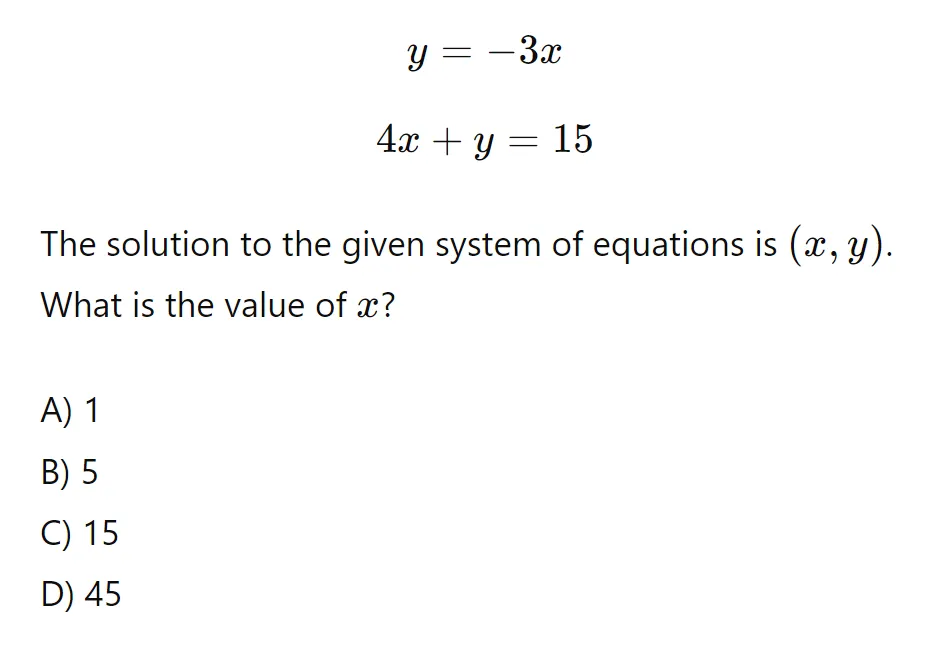
Steps to solve a linear system using Desmos
Step 1.
Enter both equations into Rows 1 and 2 of the Desmos expression list.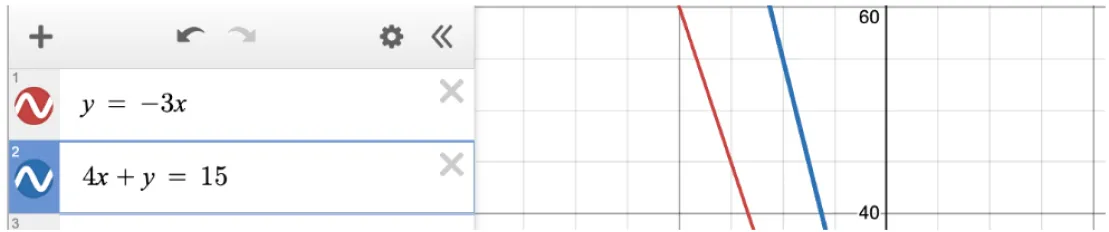
Step 2.
Hover over the intersection point with your cursor. Desmos highlights the exact coordinates of the solution. 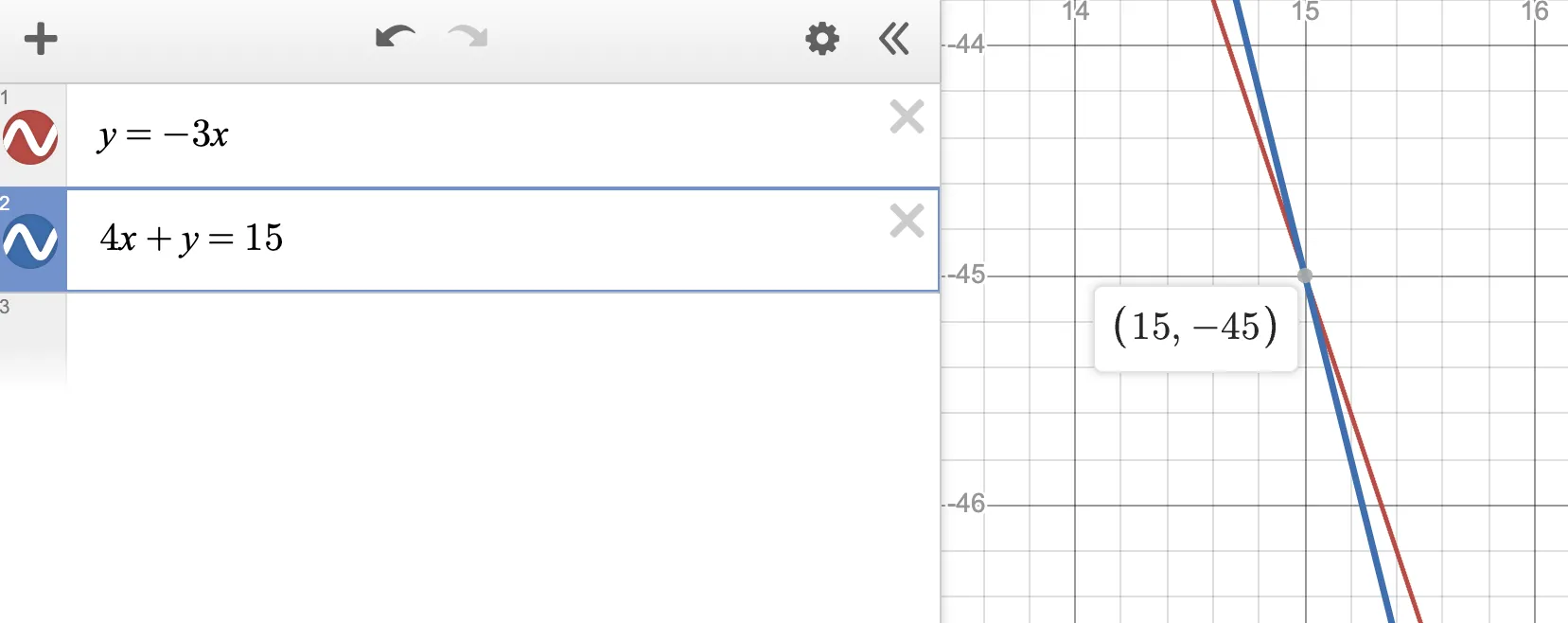
The lines intersect at (15, -45). The question asks for the x-value of the solution, which is 15. Choice C is correct.
See Desmos in Action: Solving System of Equation
Check out this video where we demonstrate the step-by-step process of solving system of equations using the Desmos SAT calculator.
Desmos Tips for SAT: Solving Mixed Systems of Equations
A mixed system contains one linear and one quadratic equation. These are more complex because the graphs can intersect at zero, one, or two points depending on the values of any unknown constants. Desmos handles these with the slider feature covered in Part 2.
Example 2
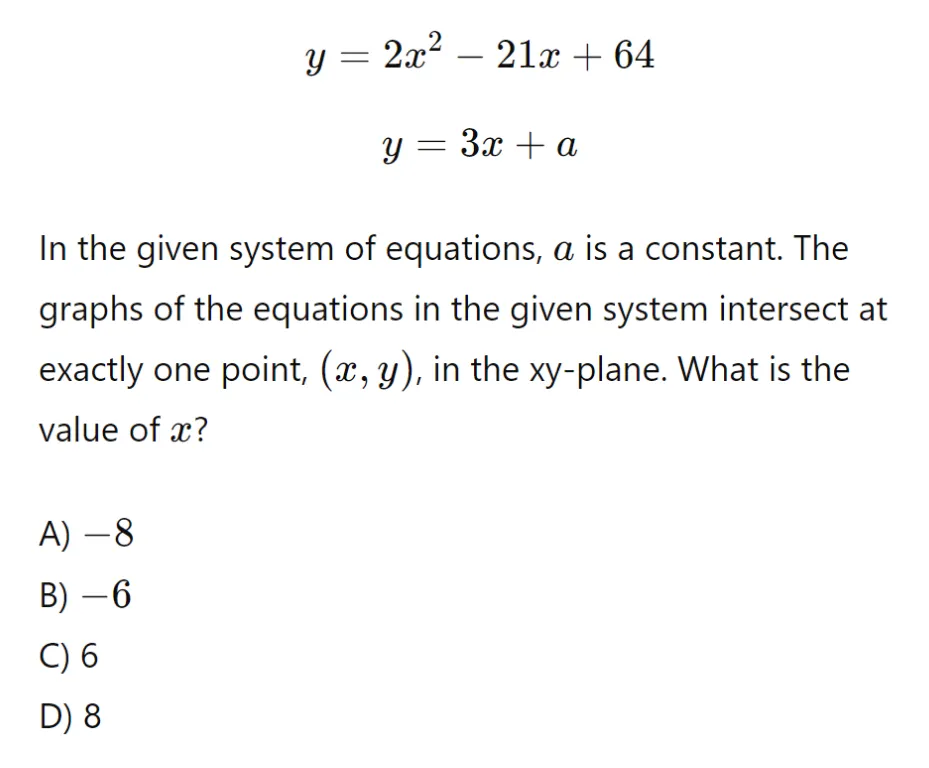
Steps to solve a mixed system with an unknown constant
Step 1.
Enter both equations into Rows 1 and 2 of the Desmos expression list. When Desmos detects the unknown constant, it prompts you to add a slider. Click to add it. 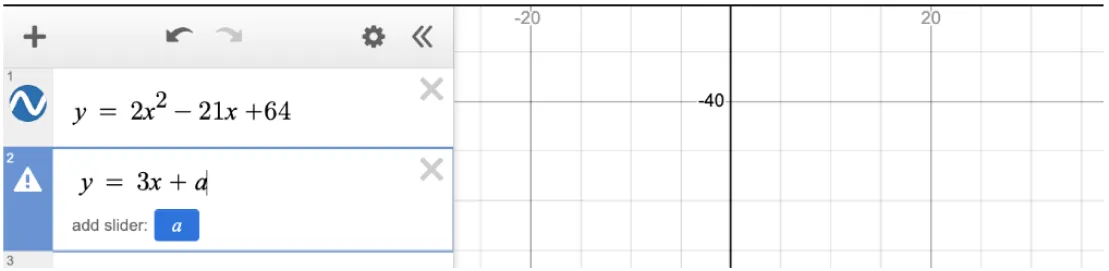
Step 2.
The question states the system has one solution, meaning the graphs touch at exactly one point. Use the slider to adjust the value of a until the two graphs intersect at exactly one point. The value a = -8 produces one intersection.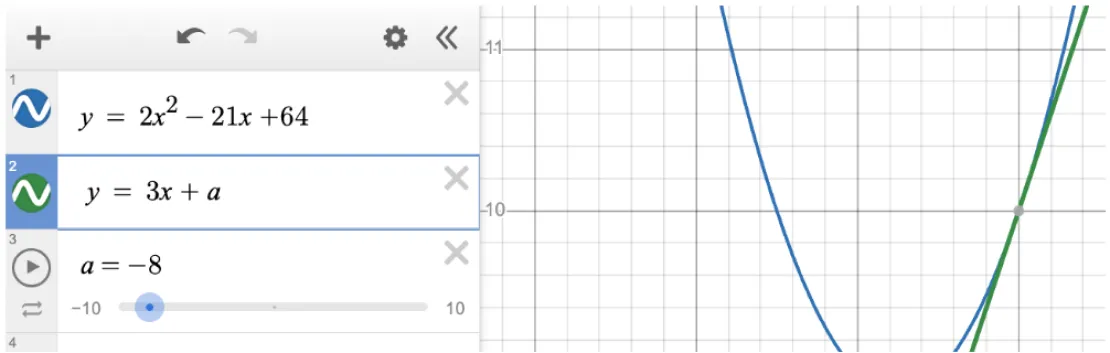
Step 3.
The value a = -8 tells you the constant, but read the question carefully. It asks for the x-value of the solution to the system. Hover over the intersection point to find x = 6. 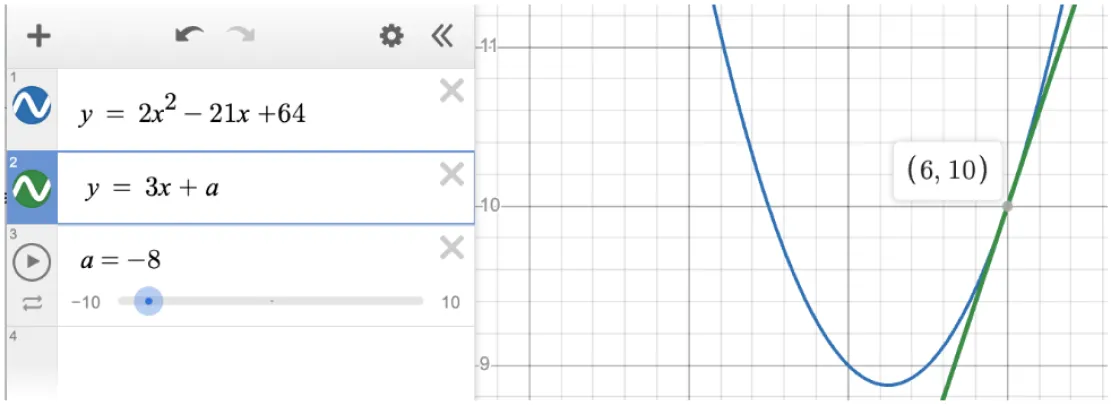
Desmos gets you to the answer faster than working through the algebra, but you still need to understand what the question is asking. The slider tells you the constant. The intersection coordinates tell you the solution. These are two different values and the question specifies which one it wants.
Additional Example Problems with Desmos SAT Calculator Solutions
Question 1
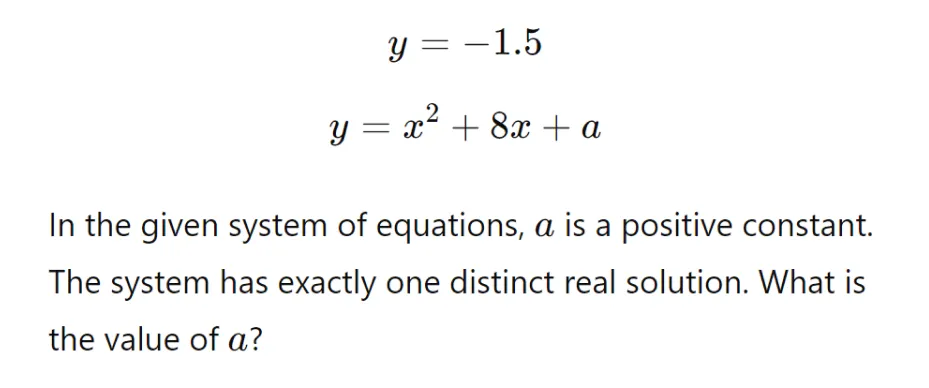
This is a mixed system where the linear function is a horizontal line with slope zero and a y-intercept of -1.5.
Solution
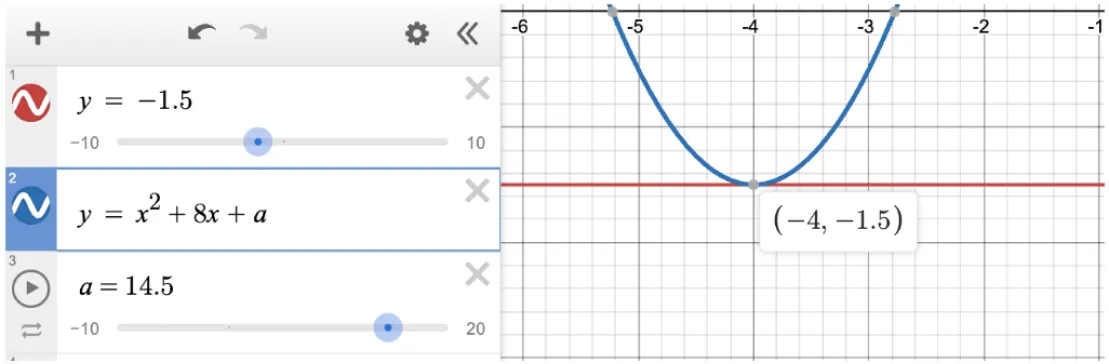
Using the Desmos slider, the value a = -14.5 produces exactly one solution. When a = -14.5, the graphs of the two functions intersect at only one point.
Question 2
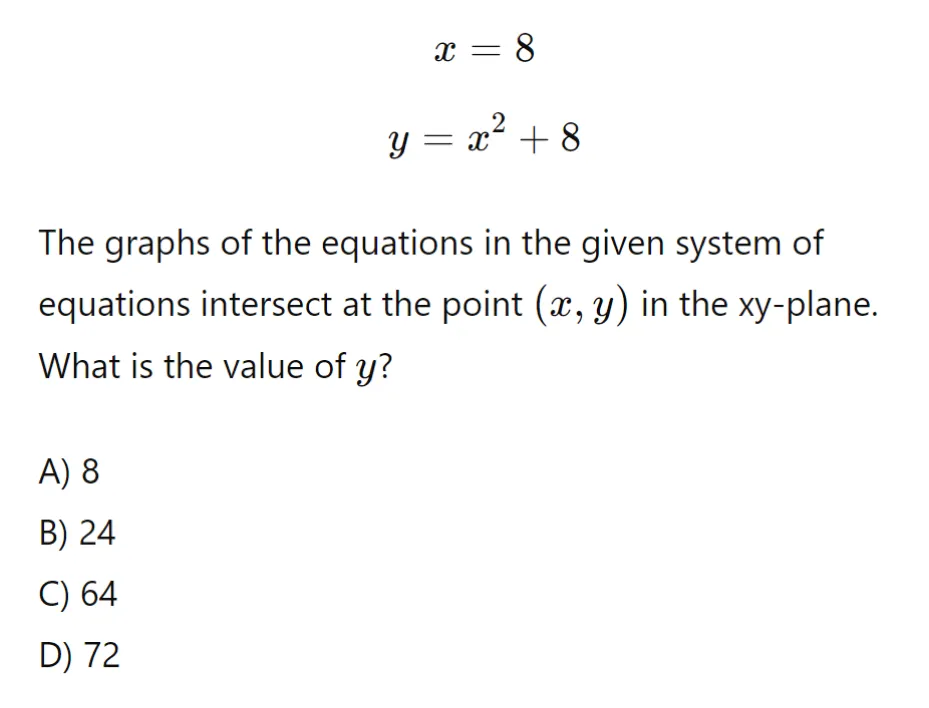
This is a mixed system containing a vertical line at x = 8 and a quadratic equation symmetrical about the y-axis with a y-intercept of 8. There are no unknown constants, so no slider is needed.
Solution
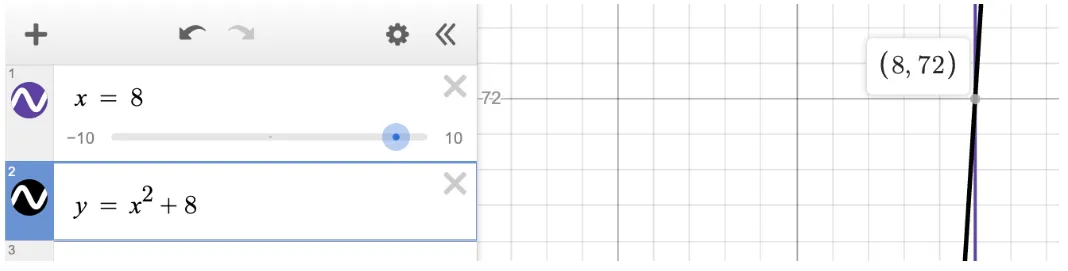
Enter both equations into Desmos and hover over the intersection point. The graphs intersect at (8, 72). The question asks for the y-value, which is 72. Choice D is correct.
Question 3
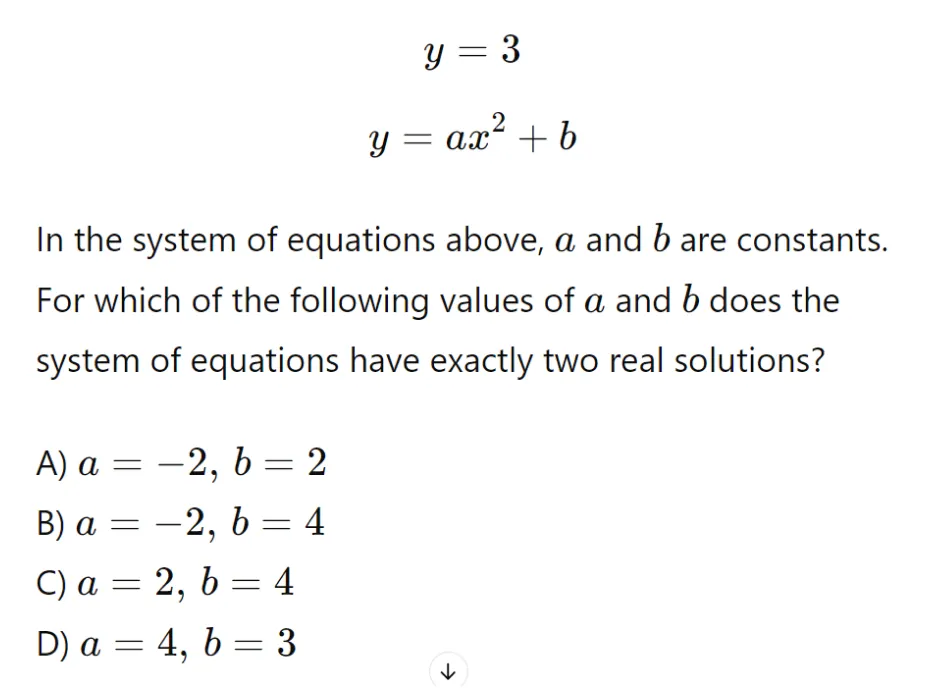
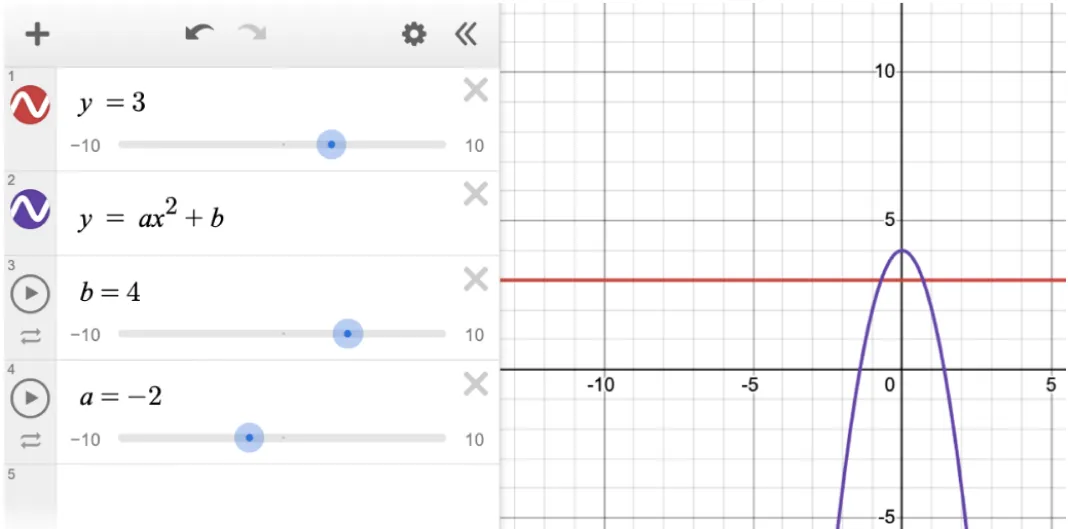
This mixed system contains a quadratic equation with two unknown constants. Because the question is multiple choice, plug in each answer choice using sliders for constants a and b.
Solution
When a = -2 and b = 4, the graphs intersect at two points. This indicates the system has two solutions. Choice B is correct.
Key Takeaways for Using Desmos on Systems Questions
- For any system where both equations are known, enter them and hover over the intersection point to find the solution coordinates
- For systems with unknown constants, use sliders and adjust until the graph matches the condition stated in the question (one solution, two solutions, no solution)
- Always re-read whether the question asks for x, y, or the value of the constant. These are three different things Desmos can show you and students frequently pick the wrong one
- Mixed systems with two unknowns can be solved on multiple choice questions by plugging in each answer choice using two sliders