
SAT Test Prep Course: Complete Guide for Tutors and Institutions

Teach SAT prep with MentoMind’s expert course: 3,500+ questions, 11 tests, diagnostics, AI support. White-label options. Deliver measurable improvements.
SAT Test Prep Course Guide

A SAT test prep course is a structured program that tutors use to deliver systematic instruction covering Reading and Writing and Math through diagnostic assessment, topic-based lessons, practice sets, assessments, and mock tests. Students who complete structured Digital SAT prep courses see significant score improvements compared to unguided self-study.

This guide explains how tutors and institutions can leverage MentoMind’s expert-crafted SAT course or customize their approach to deliver consistent, measurable score improvements across student batches.

What Is the Digital SAT?

The Digital SAT is a standardized college admissions exam administered by the College Board. It features two sections (Reading and Writing, Math), adaptive module design, and is accepted by most U.S. universities as well as universities in Canada, the UK, Australia, and many other countries worldwide for college admissions.

Exam Structure for Tutors:

Section Modules Time Questions Key Focus Areas
Reading & Writing
2 Adaptive
64 min
54
Grammar, rhetoric, comprehension, vocabulary
Math
2 Adaptive
70 min
44
Algebra, functions, geometry, data analysis

Adaptive Format Implications:

The SAT adaptive testing format means the second module in each section adapts based on first module performance. Strong first module performance unlocks harder questions with higher scoring potential.

Teaching implication: Train students to prioritize accuracy in Module 1. About 60-70% of the score ceiling is determined by first module performance in this computer adaptive SAT format.

For complete exam details: Read Understanding the DSAT

SAT vs ACT: Which Should Tutors Recommend First?

Before starting any SAT or ACT test prep course, tutors must help students choose the right test. A diagnostic assessment for SAT and ACT is essential to determine the best fit for each student’s strengths.

Comparison for Tutors:

Factor SAT ACT
Format
Digital, Adaptive
Paper/digital, linear
Duration
2 hr 14 min
2 hr 45 min
Math Focus
Algebra Advanced Math (functions, nonlinear equations) Problem-Solving & Data Analysis Geometry & Trigonometry
Broader including trig
Calculator
Desmos throughout
Allowed throughout
Reading
Shorter passages
Longer passages
Science
None
Yes (data interpretation)
Pacing
Moderate
Fast

Diagnostic Test Strategy:

Start with both diagnostics: Have students take full-length diagnostic tests for both SAT and ACT before committing. MentoMind provides free adaptive diagnostic tests that analyze:

  • Section-level performance
  • Topic strengths/weaknesses
  • Pacing and timing patterns
  • Question difficulty handling

Recommend SAT When Student:

  • Is stronger in algebra and functions
  • Prefers shorter reading passages
  • Reads more slowly and carefully
  • Is comfortable with adaptive testing

Recommend ACT When Student:

  • Excels in science and data interpretation
  • Reads quickly
  • Prefers linear, predictable format
  • Is comfortable with fast pacing

ACT resources: Highest ACT Score

Best practice: Compare diagnostic results side-by-side. A 50+ point SAT advantage or 2+ point ACT advantage typically indicates the better test choice.

What Should a SAT Test Prep Course Include?

A complete SAT test prep course structure must begin with comprehensive diagnostic testing, followed by personalized instruction, extensive practice, regular assessments, and systematic revision.

1. Diagnostic Test & Analysis (Critical First Step)

Initial Diagnostic Assessment:

  • Full-length adaptive SAT simulation
  • Establishes baseline score (400-1600 scale)
  • Identifies topic-level strengths and weaknesses
  • Reveals pacing issues and timing patterns
  • Generates personalized SAT learning pathway

Diagnostic Analysis Components:

  • Section breakdown (Reading/Writing vs Math)
  • SAT skill mapping by topic
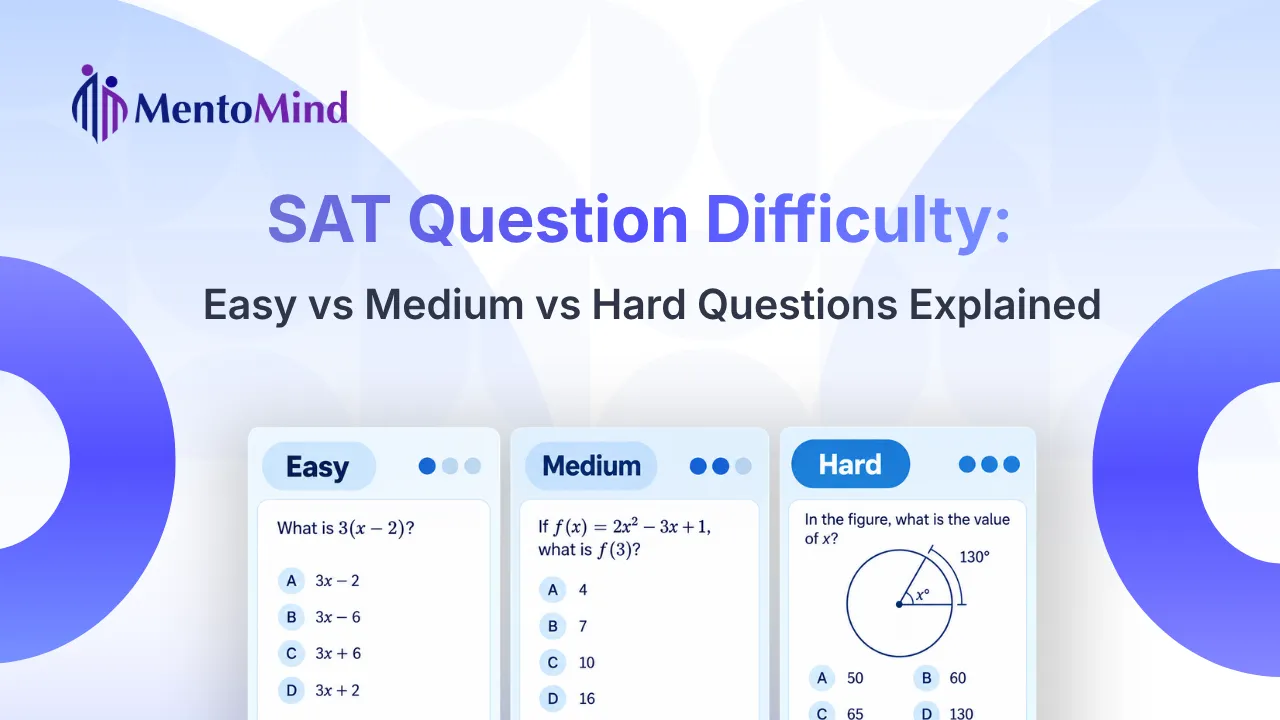
  • Difficulty performance (easy/medium/hard)
  • Time per question analysis
  • Error pattern identification

Without proper SAT diagnostic testing, tutors teach blindly. The diagnostic creates the roadmap for the entire course.

2. Essential Course Components:

Concept Lessons (25-30 hours):

  • Short, focused SAT instruction modules (15-30 minutes per topic)
  • Cover all high-impact SAT topics systematically
  • Include examples and demonstrations
  • Progress from foundational to advanced

Topic-Based Practice (3,500+ questions): MentoMind’s SAT practice question bank includes:

  • Organized by skill and difficulty levels
  • Beginner → Intermediate → Advanced → Mastery progression
  • Minimum 30-50 questions per topic per difficulty level
  • Immediate feedback with AI-powered explanations

Weekly Assessments:

  • SAT topic quizzes after each section (20-30 questions)
  • Mini-module tests for pacing practice
  • Cumulative assessments measuring retention

Full-Length Mock Tests (10-11 total): MentoMind provides:

  • 1 diagnostic test (unlimited attempts)
  • 9-10 full-length adaptive practice tests
  • Accurate Digital SAT simulation
  • Detailed score breakdowns by section and topic
  • Complete timing and pacing analysis

Analytics and Tracking:

  • Individual student performance dashboards
  • Batch-wide performance reports
  • Real-time skill tracking by topic/subtopic
  • Progress visualization over time

AI-Powered Support:

  • 24/7 AI chatbot (Mento) for instant help
  • Step-by-step solution guidance
  • Concept clarification on demand
  • Personalized study recommendations

For tracking student progress: Read How to Track SAT Student Progress

Why Use MentoMind’s Expert-Crafted SAT Course?

MentoMind provides a complete, expert-designed SAT course that tutors can use immediately without building from scratch, saving hundreds of hours while delivering proven results with professional SAT prep content.

MentoMind’s SAT Course Includes:

Comprehensive Content:

  • 3,500+ professionally created SAT practice questions
  • 11 full-length adaptive tests (1 diagnostic + 10 practice)
  • Topic guides with examples (PDF)
  • SAT vocabulary lists with context-based exercises

Built-in Learning Structure:

  • Pre-organized SAT topic hierarchy
  • Difficulty progression for each topic
  • Adaptive practice by skill level
  • Automatic skill tracking

For Tutors:

  • Ready-to-teach SAT curriculum
  • Can ADD custom questions to supplement
  • Full white-label options (your brand, logo, domain)
  • Teacher dashboard for monitoring progress

White-Label Flexibility:

Tutors can brand the entire MentoMind SAT tutoring platform:

  • Custom domain (yourbrand.com)
  • Your logo
  • Your company name throughout
  • Maintain course quality while owning the experience

This allows tutors to offer professional SAT prep immediately without course creation time.

Why Should Tutors Use Structured SAT Test Prep Courses?

Structured SAT courses save preparation time, maintain consistent quality across batches, standardize teaching delivery, and produce more predictable score improvements than ad-hoc instruction.

Benefits for Tutors:

  • Immediate Start: Begin teaching immediately with MentoMind’s expert course. No need to create content from scratch.
  • Reduced Prep Time: Reusable course structure allows tutors to focus on instruction rather than planning.
  • Consistent Quality: Every student receives professionally designed content. Quality doesn’t vary by session or instructor mood.
  • Predictable Results: Students completing the full program see significant and measurable improvements.
  • Scalable Teaching: Teach multiple students or batches simultaneously. Content works for 1:1 tutoring, small groups, or large classes.

Benefits for Institutions:

  • Standardized Curriculum: All tutors teach from the same expert framework, ensuring consistent student experience.
  • Quality Control: Analytics and progress tracking identify struggling students instantly.
  • Parent Communication: Shareable reports show clear progress and justify program value.

For guidance on scaling: Read Scale SAT Tutoring Income

How Should Tutors Teach SAT Prep Step by Step?

Effective SAT instruction methodology follows a systematic approach: diagnostic assessment first, high-impact concepts next, extensive topic-based practice, regular assessments, and error-based revision.

Step 1: Start with Comprehensive Diagnostic Testing

Never skip the diagnostic. It’s the foundation of personalized SAT instruction.

Diagnostic Process:

  1. Administer full-length adaptive diagnostic test
  2. Analyze results by section, topic, and difficulty
  3. Identify top 3-5 weakness areas
  4. Create personalized SAT learning plan
  5. Set realistic score improvement targets

Use diagnostic data to:

  • Prioritize SAT topics needing most work
  • Adjust course pacing for student needs
  • Set milestone goals for motivation
  • Track improvement from baseline

Step 2: Teach High-Impact Concepts First

Focus early lessons on high-frequency SAT topics that appear most frequently and yield fastest score gains.

Reading and Writing Priority Topics:

  • Grammar rules (subject-verb agreement, punctuation, pronouns)
  • Transitions and logical connectors
  • Rhetoric and author purpose
  • Vocabulary in context

Math Priority Topics:

  • Linear equations and systems
  • Quadratic functions
  • Ratios and percentages
  • Data analysis and interpretation

About 70% of Reading/Writing questions test grammar from six categories. About 55% of Math questions come from four topic areas.

Step 3: Assign Extensive Topic-Based Practice

MentoMind’s SAT practice structure ensures sufficient volume at each level:

Practice Structure per Topic:

  • Beginner SAT questions: 30-50 questions (concept reinforcement)
  • Intermediate SAT questions: 30-50 questions (application practice)
  • Advanced SAT questions: 30-50 questions (complex scenarios)
  • Mastery-level SAT questions: 20-30 questions (exam-level difficulty)

Students shouldn’t advance until achieving 75-80% accuracy at current level.

Step 4: Conduct Regular Assessments

Assessments verify understanding and identify gaps before they compound.

SAT Assessment Schedule:

  • Weekly SAT topic quizzes (20-30 questions)
  • Bi-weekly SAT section tests (full timed sections)
  • SAT mock tests every 10-14 days (10-11 total throughout program)

Mock tests reveal pacing issues, stamina problems, and topic weaknesses that targeted practice alone won’t show.

Step 5: Implement Error-Based Revision

Most score improvement happens during revision. MentoMind automatically tracks SAT error analysis:

  • Wrong answers (concept gaps)
  • Slow responses (process inefficiency)
  • Careless mistakes (attention patterns)
  • Repeated error types (persistent weaknesses)

The platform creates personalized revision sets based on mistakes, ensuring efficient review.

Additional teaching strategies:

For study planning: Read SAT Study Plan for Your Students

What Are the High-Impact Topics Tutors Should Emphasize?

Reading and Writing High-Frequency Topics:

SAT Grammar (35-40% of section):

  • Subject-verb agreement
  • Pronoun clarity and agreement
  • SAT punctuation rules
  • Modifier placement
  • Parallel structure

SAT Rhetoric (25-30% of section):

  • Transitions and logical flow
  • Author purpose and tone
  • Evidence and support
  • Conciseness and clarity

SAT Reading Comprehension (30-35% of section):

  • Main idea and central claims
  • SAT inference questions
  • SAT vocabulary in context
  • Text structure and organization

Math High-Frequency Topics:

SAT Algebra (35-40% of section):

  • Linear equations and inequalities
  • SAT systems of equations
  • Absolute value
  • SAT word problems

SAT Functions (15-20% of section):

  • Quadratic functions
  • Function notation
  • Graph interpretation
  • Transformations

SAT Geometry and Trigonometry (15-20% of section):

  • Coordinate geometry
  • Angles and triangles
  • Circles
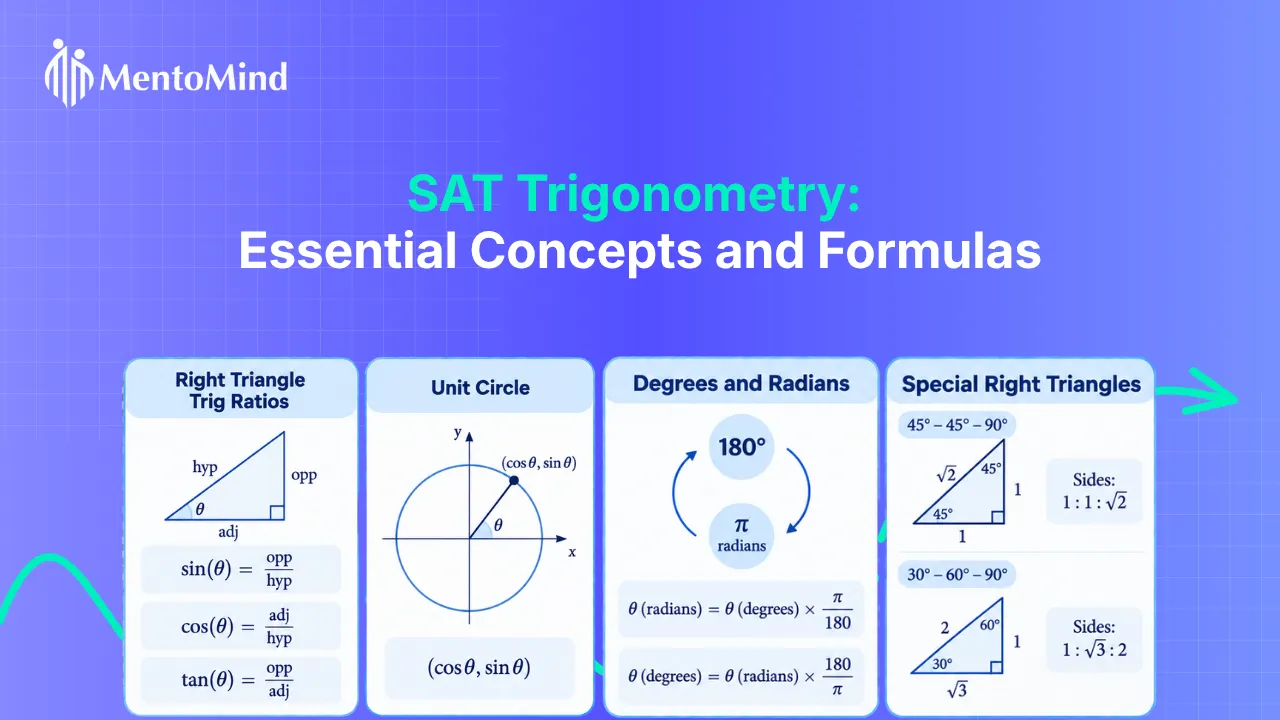
  • Basic SAT trigonometry

SAT Data Analysis (15-20% of section):

  • Ratios and proportions
  • Percentages
  • SAT statistics and probability
  • Data interpretation

For calculator strategies: Read our Desmos series:

For additional preparation resources:

How Long Should an SAT Prep Course Be?

SAT prep course duration depends on diagnostic results, target score, and available study time.

Recommended Timelines Based on Diagnostic:
Starting Score Target Gain SAT Prep Timeline Total Hours Mock Tests
1200+
100-150 points
4-6 weeks
30-40 hours
3-4 tests
1000-1200
150-200 points
8-10 weeks
50-70 hours
6-8 tests
Below 1000
200+ points
12-16 weeks
80-100 hours
8-10 tests
Weekly Time Allocation:

Recommended SAT study schedule: 8-10 hours per week

  • 4-6 hours: Guided SAT instruction and practice
  • 2-3 hours: Independent SAT homework
  • 1-2 hours: SAT practice tests or assessments

Students aiming for 200+ point improvements need the full program with 8-10 Digital SAT mock tests for adequate practice.

What Prerequisites Do Tutors Need for Teaching SAT Prep?

Effective SAT instruction requires content mastery and teaching skills.

Content Knowledge:

  • Algebra mastery (linear, quadratic, systems)
  • Grammar and rhetoric rules
  • Reading comprehension strategies
  • Data interpretation techniques
  • Desmos calculator proficiency

Teaching Skills:

  • Diagnostic interpretation
  • Error pattern identification
  • Adaptive pacing for different learners
  • Time management coaching
  • Test anxiety guidance

For becoming an SAT tutor: Read How to Become an SAT Tutor

For growing your tutoring business:

How MentoMind Empowers Tutors and Institutions

MentoMind provides everything needed to run professional SAT prep programs without building courses from scratch.

For Individual Tutors:

Instant Professional Setup:

  • Start teaching with expert content immediately
  • White-label under your brand
  • Set your own pricing
  • Track student progress

Business Growth Tools:

  • Free diagnostic tests for lead generation
  • Parent-ready progress reports
  • Flexible pricing packages (monthly, quarterly, annual)

For Institutions:

Scalable Implementation:

  • Bulk student licenses with discounts
  • Multi-location dashboard
  • Consistent curriculum across all tutors

Flexible Delivery Models:

  • Self-paced programs
  • Instructor-led classes
  • Hybrid approaches
  • 1:1 and group instruction support

Key Platform Features:

Can Customize:

  • Add supplementary questions
  • Create custom assignments
  • Build additional quizzes
  • Design your own courses alongside

White-Label Options:

  • Your domain
  • Your branding and logo
  • Your pricing

This balance ensures course quality while giving tutors business flexibility.

SAT Test Prep Course Glossary

  • SAT Diagnostic Test: Initial full-length adaptive test establishing baseline scores and identifying topic gaps to create personalized SAT learning paths before instruction begins.
  • Adaptive Testing: The Digital SAT’s format where second module difficulty adjusts based on first module performance, affecting potential score range.
  • Topic-Based Practice: SAT practice questions organized by specific skills (grammar, algebra, inference) with difficulty progression from Beginner through Mastery levels.
  • Mock Test: Full-length SAT simulation with accurate timing and adaptive format used to build stamina, practice pacing, and measure progress.
  • White-Label Platform: MentoMind’s ability to rebrand the entire SAT prep platform under a tutor’s domain and logo while maintaining course quality.
  • Skill Tracking: Real-time monitoring of student mastery by SAT topic and subtopic, automatically updated as students complete practice questions.

Start Teaching SAT Prep with MentoMind Today

MentoMind’s expert-crafted SAT test prep course provides tutors with immediate access to 3,500+ practice questions, 11 adaptive tests, comprehensive diagnostics, AI-powered support, and white-label flexibility—eliminating course creation time while delivering consistent, measurable improvements.

The platform combines professional content quality with business flexibility. Tutors can add custom content, brand everything as their own, and choose their pricing model. This balance protects educational quality while empowering tutor businesses.

Success starts with diagnostic testing that creates personalized pathways, followed by systematic instruction through high-impact topics, extensive practice (30-50 questions per difficulty level), 8-10 mock tests, and AI-assisted revision of mistakes.

Whether you’re an individual tutor seeking professional content or an institution requiring scalable solutions, MentoMind provides the complete infrastructure: expert curriculum, student analytics, parent reporting, and white-label options—all ready to use today.

Transform your SAT tutoring with proven content, powerful tools, and the flexibility to build your educational brand.

Success Stories from MentoMind Tutors:

Frequently Asked Questions

How long should an SAT prep course be?

Based on SAT diagnostic test results: students starting above 1200 need 4-6 weeks (30-40 hours), those at 1000-1200 need 8-10 weeks (50-70 hours), and those below 1000 need 12-16 weeks (80-100 hours) for optimal SAT score improvement.

Related resources:

When should students begin SAT preparation?

Most students start SAT test preparation 3-6 months before their test date. Begin with a comprehensive diagnostic test to determine the required preparation timeline based on current score and target goals.

How many mock tests should students take?

Students need 8-10 full-length SAT mock tests throughout their preparation. MentoMind provides 10 adaptive practice tests plus 1 diagnostic. Space tests 10-14 days apart for optimal learning between attempts.

What score improvement can tutors expect from MentoMind's course?

Students completing MentoMind’s full Digital SAT course typically see significant improvements. Results vary based on starting score, study consistency, course completion rate, and number of SAT practice tests taken. The diagnostic test helps set realistic improvement targets.

Can tutors modify MentoMind's SAT course content?

Tutors cannot modify the core 3,500+ SAT practice questions or topic hierarchy to maintain quality standards. However, tutors can add supplementary questions, create custom SAT assignments, and white-label the entire SAT prep platform under their brand.

How does the diagnostic test improve course outcomes?

The SAT diagnostic test identifies specific weaknesses, creates personalized learning paths, sets baseline scores for tracking improvement, and helps prioritize study time on high-impact SAT areas. Never skip the diagnostic—it’s essential for targeted preparation.

What makes MentoMind different from free SAT resources?

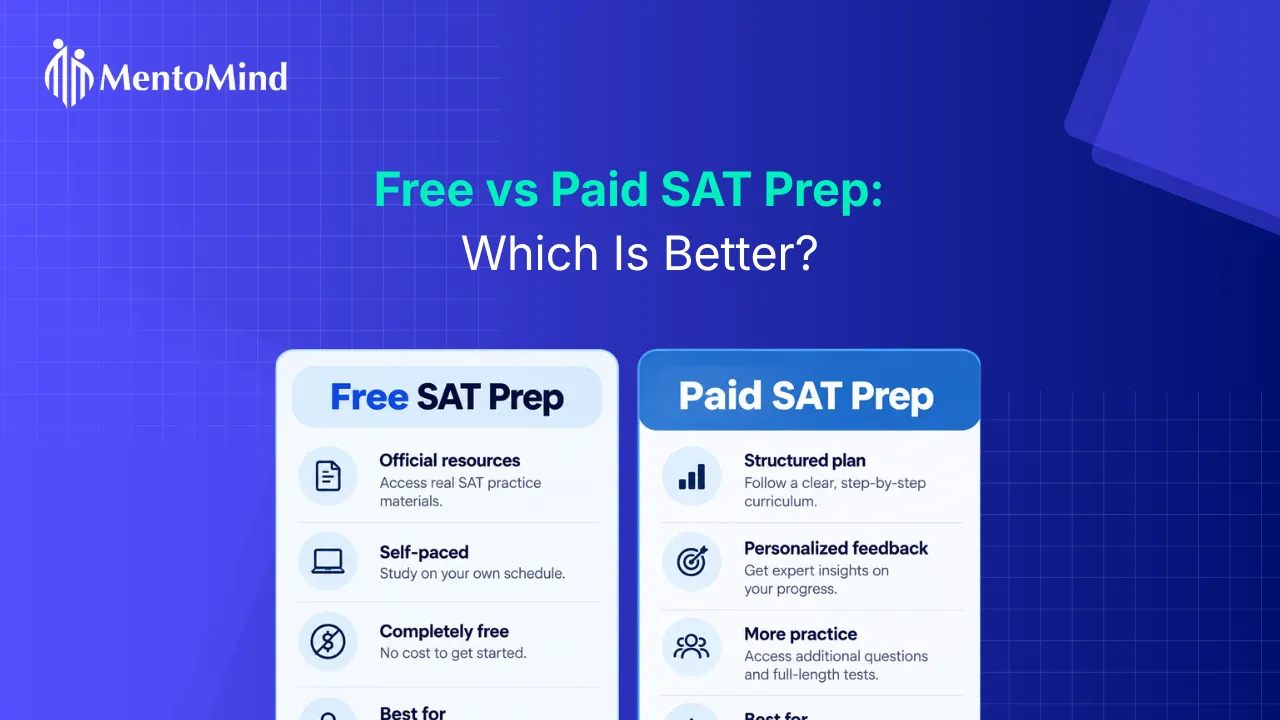
MentoMind offers 3,500+ expert-crafted SAT questions, 10 adaptive mock tests matching the real Digital SAT, AI-powered instant help, comprehensive SAT analytics, white-label options for tutors, and proven significant score improvements—features unavailable in free resources like Khan Academy or Bluebook.

How do institutions track student progress?

MentoMind provides real-time SAT dashboards showing individual and batch-wide performance, topic-level mastery tracking, mock test score trends, time spent studying, and shareable parent reports—all automatically updated as students practice.

What support does MentoMind provide for tutors?

MentoMind offers tutor onboarding sessions, platform training, SAT analytics interpretation guidance, marketing materials for your branded program, technical support, and access to best practices from successful SAT tutoring programs.

Platform and tools resources:

Is the SAT accepted internationally?

Yes, the SAT is accepted by universities in the United States, Canada, United Kingdom, Australia, and many other countries worldwide. Over 4,000 universities globally accept SAT scores for admissions.

We use cookies to personalize your experience. By using our website you agree to our Terms and Conditions and Privacy Policy.